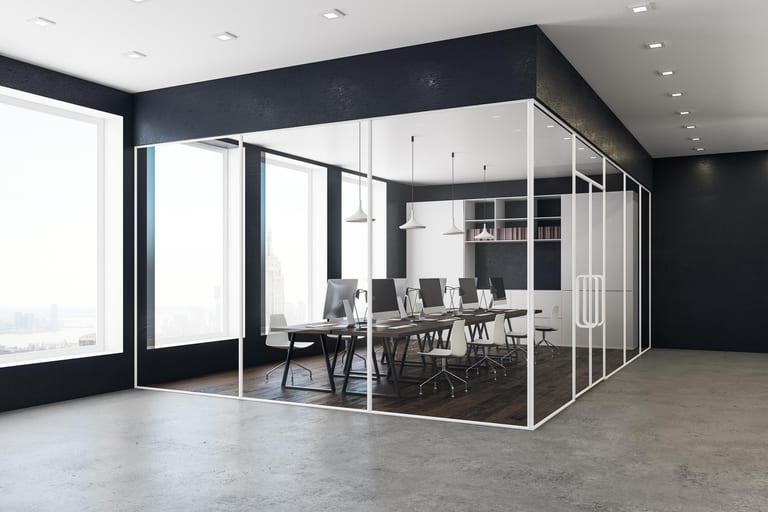
How hybrid work is reshaping corporate interior programmes — flexibility, wellbeing, and brand identity in the workplace.
Hybrid work has permanently altered how organisations think about floor plates. The most successful corporate fit-outs we deliver today balance three priorities: focused work, collaboration, and brand presence.
The workplace is no longer a container for desks — it is a calibrated environment where teams choose how they work, not where they are assigned.
The shift to activity-based design
Fixed desk ratios are giving way to activity-based planning — focus pods, phone booths, and open collaboration zones sized to actual usage patterns, not legacy headcount models.
- Right-size collaboration zones to meeting culture, not seat count
- Provide acoustic privacy without building a maze of closed rooms
- Design town-hall and AV moments that justify the commute
Material and acoustic quality
Employees return to offices that feel materially richer than their home setups. Acoustic privacy, layered lighting, and biophilic elements are no longer optional — they are baseline expectations.
We specify finishes that age gracefully under heavy use: stone and timber at touch points, durable textiles in lounge zones, and lighting scenes that shift from focused morning work to evening client hosting.
Execution under occupation
Phased fit-outs in occupied buildings demand night-shift programmes, dust control, and a single PMO desk. Design intent only matters if it survives site constraints.
A beautiful boardroom means nothing if the floor below cannot operate during fit-out. Programme design is interior design.